
Last Successful Run
That field gives people way more confidence than it should. In Boomi, last successful run doesn’t move the way most people think—and that can quietly create bigger problems.
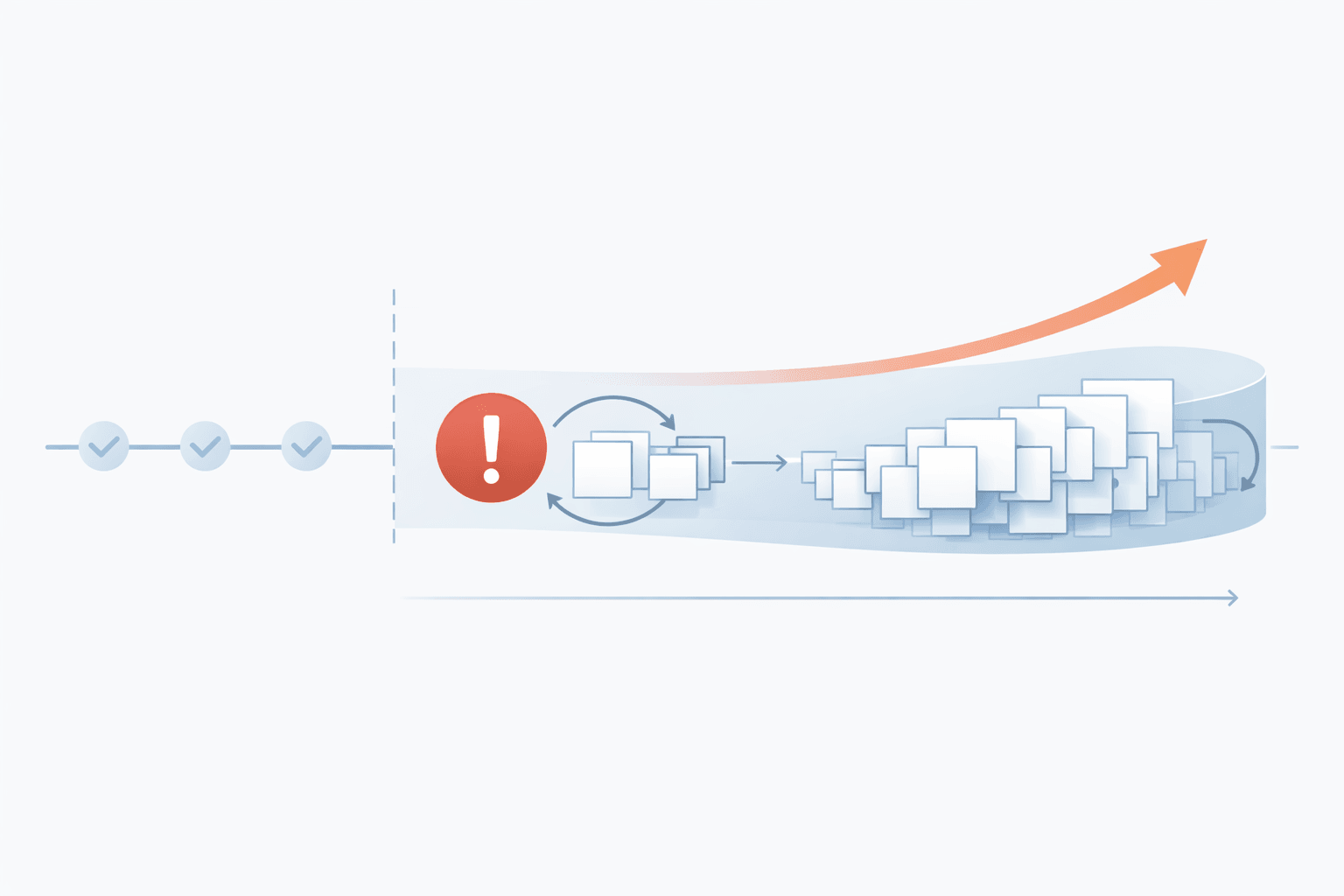
Last Successful Run
That field gives people way more confidence than it should.
Boomi process.
Running on a schedule.
Every hour, every day, whatever.
Runs keep firing.
You see executions happening.
So the assumption becomes:
“We’re moving forward.”
Then something fails.
Unhandled error. Process-level failure.
The next run still fires on schedule.
New day. New hour. New run.
So people assume:
“We’re on the next batch now.”
But you’re not.
What’s actually happening
There are two different things:
- Last Run → always moves
- Last Successful Run → only moves on success
When a run fails:
The schedule keeps going.
Executions keep happening.
But the last successful run stays where it was.
So every new run is still anchored to that same point in time.
What that means
You’re not processing “new” data.
You’re processing everything since the last successful run.
That window keeps growing.
So now you’ve got:
- increasing data volume
- longer processing windows
- more load each run
And depending on how far the process got before the failure…
you may also be reprocessing records that already went through.
Nothing is broken.
Boomi is doing exactly what it’s supposed to do.
The issue is assuming:
“New run = new data”
It doesn’t.
It’s:
“New run = everything since last successful run”
Where this bites you
At first, you don’t notice.
Then:
- runs start taking longer
- data volume spikes
- records look duplicated or out of sync
And now you’re trying to figure out why things feel off.
What it turns into
At that point, every run is doing the same thing again.
- same window
- same data
- bigger volume each time
And it keeps going.
Until someone steps in and fixes it.
Where idempotency actually matters
This is where idempotency stops being optional.
Because if your process can safely handle the same records more than once…
this isn’t a problem.
If it can’t…
you’re now dealing with:
- duplicate processing
- inconsistent updates
- cleanup after the fact
And that usually shows up later, not immediately.
The takeaway
“Last successful run” isn’t tied to your schedule.
It’s tied to completion.
And if you don’t understand that…
you’ll think you’re moving forward when you’re not.
You’ll just be reprocessing a bigger and bigger window.
Dealing with this in your own NetSuite account?
We fix exactly these problems in production. Run a free read-only health scan, or talk to a senior NetSuite consultant who has seen it before.

Written by Mike Pagani, founder of Adaptive Solutions Group — a NetSuite consultancy based in Pittsburgh, PA. Mike has been building SuiteScript automations, integrations, and NetSuite rescue projects since 2013.